
Verified Attendees
Exhibiting Companies
Accuracy
Delivery Time
Verification Layers
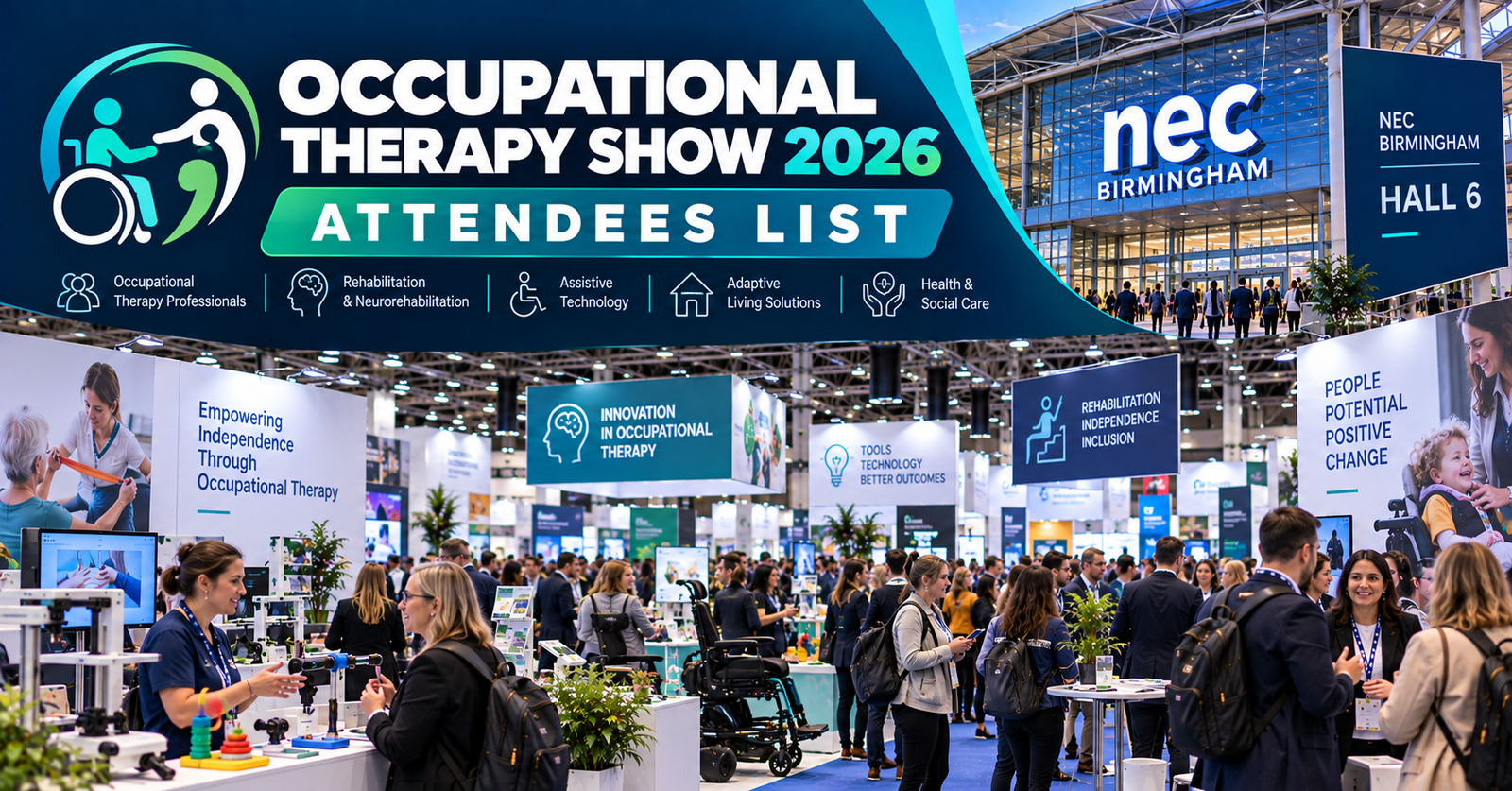
The Occupational Therapy Show 2026 will bring together companies and organisations which provide occupational therapy products, rehabilitation equipment, assistive technology, healthcare solutions, and professional services.
The companies offer assistive devices, adaptive equipment, aids for daily living, communication technologies, and other kinds of solutions which help individuals to live more independently and with greater accessibility.
The suppliers provide equipment for rehabilitation, tools for therapy, products to help with mobility, exercise systems, and clinical solutions for occupational therapy and patient rehabilitation.
The organisations that provide mobility aids, wheelchairs, seating solutions, accessibility equipment, transfer systems, and other products aimed at improving patient mobility.
The companies that offer healthcare technologies, digital health platforms, assessment tools, clinical software, and various solutions for occupational therapy practices.
The organisations offer continuing professional development training, professional education, consultancy, recruitment, publications, and various specialist services for occupational therapists and other healthcare professionals.
The text includes providers who offer help with community rehabilitation, social care, housing adaptations, independent living, vocational rehabilitation, and support for patients specializing in particular areas.
Occupational therapists, clinical practitioners, and specialists engaged in rehabilitation, patient care, functional assessment, and occupational therapy.
Rehabilitation specialists, therapy professionals, physiotherapy teams, and clinicians dedicated to patient recovery, mobility, independence, and functional improvement.
Professionals who evaluate and implement assistive technology, adaptive equipment, mobility products, and accessibility solutions.
Healthcare practitioners, allied health professionals, case managers, and clinical teams involved in coordinated patient care and rehabilitation.
Social-care professionals, educators, housing specialists, and support teams involved in accessibility, independent living, community care, and workplace adaptation.
Procurement managers, equipment buyers, service managers, clinical leads, and senior decision-makers who evaluate rehabilitation products, assistive technologies, and healthcare services.
The database includes occupational therapists, rehabilitation professionals, clinical leads, case managers, assistive technology specialists, and healthcare decision-makers.
Professionally verified contact information enables identification of relevant prospects in occupational therapy, rehabilitation, healthcare, assistive technology, and allied health.
The database supports email marketing, LinkedIn outreach, appointment setting, telemarketing, account-based campaigns, and post-event follow-ups.
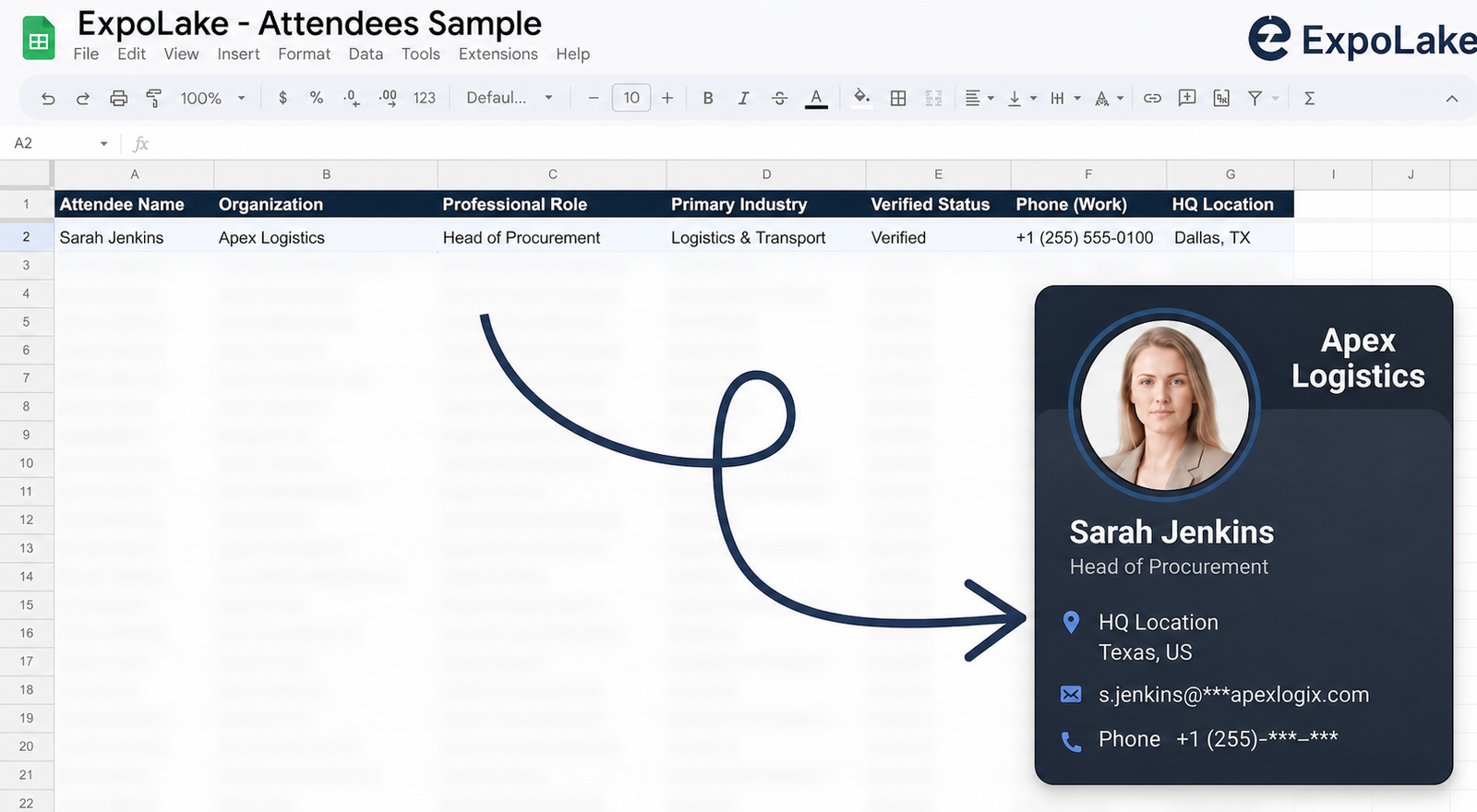
Records include contact details, job titles, organization type, seniority, company information, location, industry, occupational therapy specialization, and rehabilitation focus.
Contacts are segmented by occupational therapy specialization, rehabilitation focus, assistive technology interests, job role, seniority, company size, geography, and attendee or exhibitor status.
The Occupational Therapy Show 2026 database is delivered in Excel or CSV format for easy integration with CRM, sales, and marketing platforms.
Get verified attendee and exhibitor contact lists from past and upcoming event editions worldwide. ExpoLake delivers accurate, segmented B2B contact data covering key decision-makers and exhibiting companies, so your outreach always reaches the right person at the right time.
Get in touch with occupational therapists, rehabilitation specialists, experts in assistive technology, case managers, and healthcare decision-makers who are seeking out new therapy and rehabilitation solutions.
Contact prospects who are interested before the event in order to tell them about your products, arrange meetings, and begin building relationships with potential customers.
Get in touch with people who are looking into rehabilitation equipment, assistive technologies, mobility solutions, clinical products, healthcare software, and therapy services.
You can meet people from healthcare organisations, rehabilitation centres, social-care providers, schools, and housing services as well as from assistive technology companies.
After the Occupational Therapy Show, use the relevant contact information to keep in touch with attendees and exhibitors, continue the conversations, and build long-term business relationships.
By using relevant attendee and exhibitor contact data before, during, and after the event, SuppEnhance will carry out its exhibiting, sponsorship, sales, and marketing activities.
Every contact in the ExpoLake database goes through a structured, multi-step sourcing and verification process before it reaches your team. Here is how we build data you can trust.
Contacts are gathered from trade shows, global directories, e-books, newsletters, and digital publications spanning dozens of industries and regions.
Machine learning fills missing fields, appends firmographic data, and segments contacts by industry, role, company size, and intent signals — automatically.
Every record is cross-checked against our master database and validated via social platforms, public registries, and news sources to confirm authenticity.
Anomalies, duplicates, and stale entries are flagged using statistical models and eliminated. A final manual audit ensures the highest standard of data quality.
A/B-tested opt-in email sequences are deployed to capture and confirm explicit consent, fully aligned with GDPR, CAN-SPAM, and CASL compliance frameworks.
A final tele-verification call confirms all data fields. Only fully validated, consented records are released to the client — clean, compliant, and ready to use.




The list of attendees can include occupational therapists, clinical practitioners, and specialists who are involved in providing rehabilitation and occupational therapy services.
The database could include contacts for rehabilitation specialists, therapy professionals, clinical teams, and other workers who are involved in patients’ recovery and in their functional care.
The database can contain professionals who specialise in assistive technology, adaptive equipment, mobility solutions, and accessibility services.
The database can be divided in order to focus on healthcare practitioners, allied health professionals, case managers, and clinical decision-makers.
The database can contain social-care professionals, members of community rehabilitation teams, housing specialists, educators, and those who provide support for independent living.