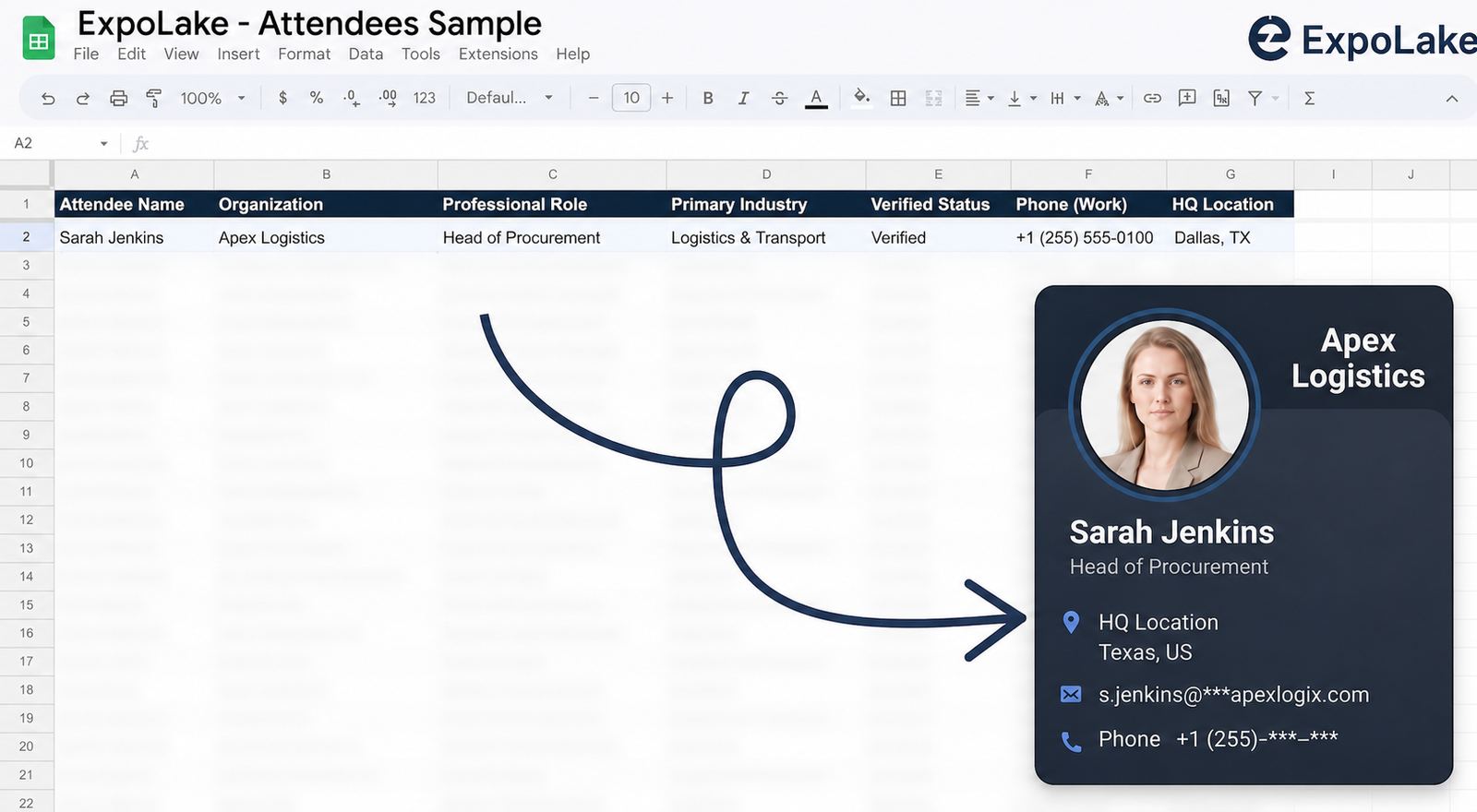
AAAAI Annual Meeting Attendee List & Exhibitor List
The AAAAI Annual Meeting is the premier professional meeting for those working in the fields of allergy, asthma, clinical immunology and respiratory care. It’s hosted by the American Academy of Allergy, Asthma & Immunology (AAAAI) and attracts a wide range of attendees including healthcare professionals, researchers, pharma companies, biotechs, medical device companies and diagnostic companies.
The event is all about emerging clinical research, late-breaking science, clinical trial data, CME, hands on workshops and of course the commercial product exhibitions. It’s an opportunity to look at the latest in allergy and immunology care, to see the new technologies and to meet people from across the clinical and life sciences sectors.
February 19 – 22, 2027
6,500+ Attendees | 150+ Exhibitors
Orleans, Louisiana, USA
Medical & Pharma
Get Your Contact List
6.5k+
Verified Attendees
150+
Exhibiting Companies
95%
Accuracy
24-72 hr
Delivery Time
5x
Verification Layers
About the AAAAI Annual Meeting
The AAAAI Annual Meeting brings together clinical specialists, academic researchers, clinicians, and industry professionals to discuss the latest in the diagnosis, management, and treatment of allergic and immunologic diseases.
Via scientific meetings, clinical education, workshops and product exhibitions, delegates have the opportunity to learn about new therapies, biologics, diagnostics, patient care solutions and the latest in respiratory medicine.
Exhibitor and Attendee Categories
Develop medicines and biologic therapies for allergy, asthma, and immune disorders.
Pharmaceutical & Biologics Companies
Organisations developing medicines, biologics and therapies for allergic, respiratory, and immunological conditions.
Medical Device & Diagnostic Manufacturers
Suppliers of allergy skin test kits, diagnostic equipment, spirometers, epinephrine auto-injectors, and point-of-care devices.
Biotechnology & Life Sciences Companies
Businesses in immunology research, therapeutic development, clinical trials and novel biologics.
Healthcare Software & Practice Management Providers
Companies providing EHRs, medical billing, telehealth, and practice management software.
Patient Advocacy Organizations & Nonprofits
Organisations which support patients and families affected by allergies, asthma and related conditions through education, advocacy and community programmes.
Medical Education & Research Organizations
Institutions and organisations which support clinical research, scientific education, professional development and healthcare training.
Attendee Categories
Allergists & Clinical Immunologists
These doctors diagnose and treat allergies, asthma, and immune system disorders.
Pulmonologists & Respiratory Specialists
These specialists treat lung and breathing problems, including asthma and related conditions.
Pediatricians & ENT Specialists
These doctors care for children with allergies, breathing issues, sinus problems, and similar conditions.
These professionals help assess patients, coordinate treatments, manage allergies, and support ongoing care.
Clinical Researchers & Academic Faculty
This group includes researchers, fellows, and faculty who study new treatments, review clinical evidence, and advance immunology.
Pharmaceutical, Biotechnology & Medical Industry Executives
Industry representatives responsible for product development, clinical research, medical affairs, commercial strategy, and healthcare partnerships.
What's Included in Our AAAAI Annual Meeting 2027 Contact Database
For pharmaceutical companies, biotechnology firms, diagnostic manufacturers, medical technology suppliers, and healthcare service providers, a targeted prospect database can support business development, market research, partnership outreach, and sales planning.
Typical Data Fields Include:
First Name
Last Name
Professional Title
Job Function
Organization or Company Name
Business Email Address, where available and permitted
Business Phone Number, where available and permitted
Company Website
Organization Type
Medical Specialty
Professional Department
Industry Segment
Company Headquarters
City
State or Region
Country
Business Address, where available
Exhibitor or Sponsor Category
Product or Service Interest
Professional or Business Profile
Data Fields Included
20+ Fields
First Name
Email Address
Job Title
Company Name
Revenue
Industry
Country
Postal Code
Last Name
Phone Number
Department
Website
Employee Size
City / State
LinkedIn Profile
Build A Tailored AAAAI Annual Meeting Prospect Database
Benefits of the AAAAI Annual Meeting Prospect Database
Reach Relevant Healthcare Professionals
Segment the prospects by medical specialty, professional role, organization type and industry relevance.
Connect with Pharmaceutical & Biotech Companies
Explore business opportunities with organizations in the biologics, therapeutic development, immunology, and clinical research space.
Identify Medical Device & Diagnostic Prospects
Develop targeted lists of suppliers and organizations offering allergy testing, respiratory equipment, and diagnostic solutions.
Support Business Development
Build a structured prospecting approach for the sales team, partnership managers, distributors, and healthcare solution providers.
Improve Market Segmentation
Group your prospects by specialty, geography, business type and product category to enable more targeted campaigns.
Plan Future Event Outreach
Use the right event and industry intelligence to prepare for your next meetings, identify potential partners and prioritise your business opportunities.
Explore Past & Upcoming AAAAI Annual Meeting Editions
Review available information about previous and upcoming AAAAI Annual Meeting editions to understand the event’s professional audience, exhibiting organisations, and evolving industry focus.
Looking for professionals or organizations relevant to your products and services? Request a sample of available AAAAI Annual Meeting-related prospect data to assess record structure, relevant segments, and potential fit for your business goals.
Sample availability depends on the source, permitted access, and the data fields available.
Every contact in the ExpoLake database goes through a structured, multi-step sourcing and verification process before it reaches your team. Here is how we build data you can trust.
01
Step 01
Multi-Source Data Harvesting
Contacts are gathered from trade shows, global directories, e-books, newsletters, and digital publications spanning dozens of industries and regions.
Trade showsDirectoriesPublicationsSubscriptions
02
Step 02
AI-Powered Enrichment
Machine learning fills missing fields, appends firmographic data, and segments contacts by industry, role, company size, and intent signals — automatically.
FirmographicsSegmentationIntent data
03
Step 03
Cross-Platform Verification
Every record is cross-checked against our master database and validated via social platforms, public registries, and news sources to confirm authenticity.
Social checkRegistry matchManual review
04
Step 04
Statistical Cleansing
Anomalies, duplicates, and stale entries are flagged using statistical models and eliminated. A final manual audit ensures the highest standard of data quality.
De-duplicationAnomaly detectionManual audit
05
Step 05
Consent Campaign
A/B-tested opt-in email sequences are deployed to capture and confirm explicit consent, fully aligned with GDPR, CAN-SPAM, and CASL compliance frameworks.
GDPRCAN-SPAMCASLA/B tested
06
Step 06
Tele-Verification & Delivery
A final tele-verification call confirms all data fields. Only fully validated, consented records are released to the client — clean, compliant, and ready to use.
Tele-verifiedCompliance-readyDelivered
List Ready ✓
What Our Clients Say
Sarah KDirector of Business Development, SaaS Company
"ExpoLake delivered one of the cleanest contact lists we have ever worked with. The data was accurate, well segmented, and ready to deploy from day one. Our pre-event outreach response rate was significantly higher than anything we had seen with previous providers."
Michael T. Head of Sales, Industrial Manufacturer
Finding verified contacts for niche industry events has always been a struggle for our sales team. ExpoLake changed that. The data arrived filtered exactly to our specifications, the bounce rate was minimal, and we booked more qualified meetings than any previous campaign."
Jennie WuMarketing Manager, Biotech Startup
"ExpoLake has become our go-to partner for event contact data. The lists are compliance-ready, the segmentation options are genuinely useful, and the turnaround time is faster than any other provider we have worked with. It has made a measurable difference to our outreach ROI."
Oliver JohnsonHead of Business Development, SaaS Company
"We have tried multiple event data providers over the years and the quality was always hit or miss. ExpoLake was a completely different experience. Accurate records, fast delivery, and a team that actually understood what we needed. We now use ExpoLake for every major trade show we target."
Connect with AAAAI Annual Meeting Prospects
Whether you offer pharmaceutical products, biologic therapies, diagnostic technologies, medical devices, or healthcare software, a focused prospecting strategy can help you identify relevant organizations and plan your outreach more effectively.
Can I get the AAAAI Annual Meeting attendee and exhibitor lists?
You can ask about the availability of AAAAI Annual Meeting attendee and exhibitor prospect data. The level of coverage and fields available will vary depending on the source and the level of availability permitted. Get in touch with ExpoLeads to discuss your requirements and request a sample.
What information may be included in a prospect database?
Depending on availability, the records may contain professional titles, organisation names, industry sectors, locations and permitted business contact details.
Can I have a custom prospect database?
Yes, you can specify the relevant specialities, types of company, markets and roles.
Is the database the official, complete attendee register?
Not in any case. Availability, coverage and source permissions all vary. Any database would need to be assessed in terms of its source, accuracy, completeness and any privacy implications.