
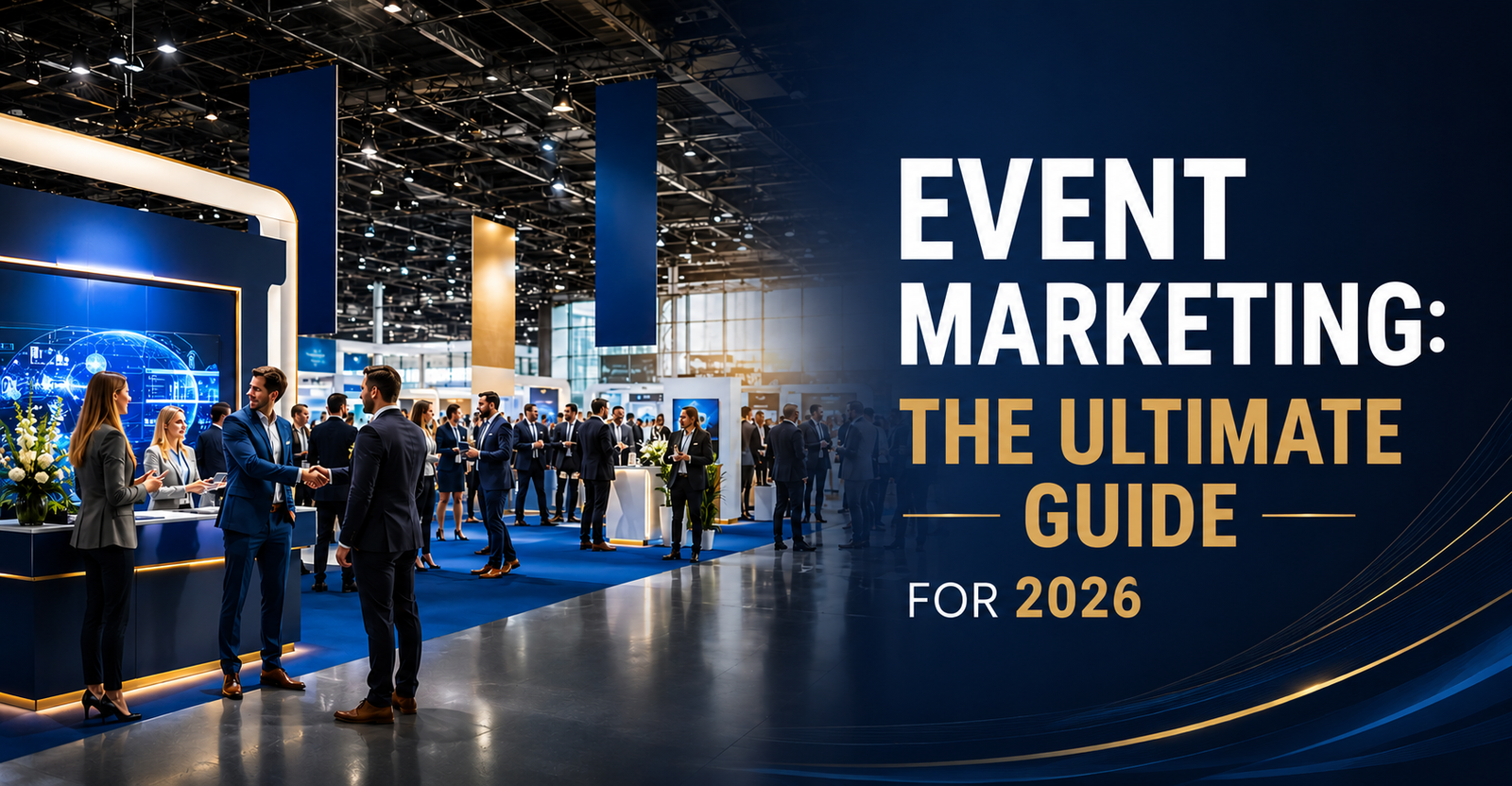
Event marketing is one of the few channels that still puts your brand in front of people in a real, memorable way. While digital ads compete for attention in crowded feeds, a well-run event creates direct interaction between your brand and the people you want to reach. That value works in two directions: for the organizers running an event, and for the exhibitors and sponsors who show up to market at it. This guide explains what event marketing is, why it works, the types of events you can run, how to build a strategy, and how to promote and measure it, plus how exhibitors can get the most out of the events they attend through smart pre-event and post-event outreach.
What Is Event Marketing?
Event marketing is a strategy that uses live experiences to promote a brand, product, service, or idea. It creates direct, face-to-face or virtual interaction between businesses and their audiences through conferences, trade shows, webinars, product launches, and experiential activations.
The term carries two meanings. It can refer to the tactics used to promote an event, or the practice of using events themselves as a marketing channel to promote an organization, product, or mission. In both cases, the goal is not just attendance. It is building relationships that last beyond the event, deepening the audience’s connection with your brand through an experience they remember.
That focus on experience is what makes the channel effective. People remember what they take part in far more than what they scroll past, and events give brands a rare chance to earn attention rather than interrupt for it.
Why Event Marketing Works
Events create impressions that stick. A compelling product demo at a trade show, a strong conference session, or an interactive brand activation forms memories and emotional connections that traditional advertising struggles to replicate.
Events also compress the sales cycle. In a single afternoon, a prospect can discover your brand, ask questions, see your product in action, and meet your team. That same journey might take months across other channels. For B2B companies in particular, events deliver something digital marketing rarely can: trust built through genuine human connection.
The investment reflects this. Events represent a large share of overall marketing spend, and experiential marketing consistently ranks among the most effective tactics available to marketers. As online channels grow more saturated and audiences harder to reach, in-person and virtual events provide an alternative that moves the needle and drives revenue.
Types of Event Marketing
Event marketing takes many forms, and the right mix depends on your audience and goals.
Trade shows and conferences put you in front of industry-specific audiences who are already interested in your space. You are not interrupting their day; you are meeting them where they have chosen to be.
Webinars and virtual events remove geographic barriers. A prospect anywhere in the world can attend as easily as someone across town. They are also easier to scale and measure than in-person gatherings, which makes them a strong entry point for smaller teams.
Experiential activations create shareable moments. Pop-up shops, immersive installations, and interactive experiences generate social content and word of mouth that extend your reach well beyond the people in the room.
Hybrid events combine in-person and virtual elements, giving attendees flexibility while widening your potential audience. Each format lends itself to different goals and different measures of return, so it helps to match the format to the outcome you want before you start planning.
How to Build an Event Marketing Strategy
A strong event marketing strategy starts with clarity, not tactics. Work through the foundations first, then build promotion on top.
Start With Your Objective
Are you generating leads, launching a product, building brand awareness, or strengthening relationships with existing customers? Your answer shapes everything that follows, from venue selection to follow-up sequences. Without a defined objective, you risk spending time and budget on activity that does not move your business forward.
Know Your Audience
Understanding your audience lets you personalize your message, choose the right channels, and design an experience that resonates. Ask who would benefit most from attending, and what their interests, goals, and challenges are. Use past attendee data, surveys, industry reports, and social insights to sharpen the picture, then segment by demographics, behavior, and interests so your campaigns speak to the right people rather than everyone at once.
Nail Down the Basics
Before promotion begins, lock in the essentials: the event name, its purpose for each group of stakeholders, the target audience, the format, and the theme. Just as important, define the key performance indicators you will use to judge success, whether that is registrations, attendance, qualified leads, or revenue. These basics become the backbone of every promotional decision you make later.
Build a Compelling Event Page
Your event page is often the first impression a prospect gets, so it needs to be clear, engaging, and easy to navigate. Include the event name and tagline, date and time, location or platform, cost, enticing details like keynote speakers, and a strong call to action leading to registration. Keep the design mobile-friendly with short paragraphs and scannable sections, and apply basic SEO: a clear H1 with the event name, relevant title tags and meta descriptions, and keywords used naturally throughout.
How to Promote Your Event
Promotion matters as much as the event itself. The strongest strategies use several channels together rather than leaning on one.
Event Email Marketing
Event email marketing remains one of the most reliable ways to drive registrations and keep attendees engaged from first invitation to final follow-up. The key is segmentation and personalization. Rather than sending the same message to everyone, separate your audiences by interest, industry, job title, or registration type, and tailor the content to each. A typical sequence runs from an invitation email that sparks interest, to a confirmation that reassures registrants, to reminders that reduce no-shows, to post-event emails that thank attendees and share content. Personalize by name, include clear calls to action such as “Add to Calendar,” keep the design mobile-friendly, and review open and click-through rates to see what is working.
Social Media Marketing
Social media is one of the best tools for reaching wider audiences and encouraging real-time interaction. Choose platforms based on where your audience actually spends time: LinkedIn for B2B and professional events, Instagram and TikTok for visually engaging experiences, Facebook for community and local events, and X for live updates. Post consistently in the run-up with speaker reveals, behind-the-scenes previews, and countdowns, and engage with the people who like, share, and comment rather than posting and walking away.
Create an Event Hashtag
A short, memorable event hashtag helps build community, track conversations, and unify your presence across platforms. When attendees, speakers, and sponsors all use the same tag, it becomes easy to follow the discussion and surface highlights. Feature it on your event page, in emails, in presentations, and on attendee badges.
Content Marketing and SEO
Content builds momentum before the event. Blog posts on key topics, teaser videos, and short speaker interviews give your audience a preview and something to share. Optimizing your event website and blog content for organic search helps the right people find your event when they search for related terms, funneling traffic to your registration page without additional ad spend.
Paid Advertising
Paid ads reach prospects that email and organic social cannot, and they deliver results quickly. Google Ads captures intent-based searches, Meta ads work well for visual content, and LinkedIn ads suit B2B and professional events. Use targeting to filter by interest, location, industry, or job title, start with a modest budget, test different creatives, and optimize based on performance.
Early-Bird Offers and Incentives
Early-bird pricing and limited-time offers create urgency and pull registrations forward. Tiered pricing and exclusive packages like VIP access reward quick action, while group discounts and referral bonuses turn your existing audience into a promotion channel. Countdown timers and “ending soon” reminders add a nudge that encourages people to commit before the deadline.
Sponsorships and Partnerships
Sponsors and partners are not just a revenue source; they extend your reach. Choose partners whose audience overlaps with yours and build in mutual promotion across each other’s networks. Influencer and affiliate collaborations work the same way, lending your event the trust those partners have already earned with their followers.
Marketing Before, During, and After the Event
Event marketing does not stop when the doors open. The most effective programs treat promotion as a continuous cycle.
Before the event, the focus is on building anticipation and driving registrations through email, social, content, and paid channels. During the event, live updates, social shares, and behind-the-scenes clips create fear of missing out among those who did not attend and give sponsors a reason to sign on next time. After the event, session recordings, video clips, and photos can be repurposed into future promotion, while the leads you captured feed directly into your follow-up.
This before, during, and after rhythm is where much of the real value lives. Engaging attendees ahead of time improves turnout, keeping them involved during the event deepens the relationship, and following up afterward converts interest into pipeline while your brand is still fresh in their minds.
How to Measure Event Marketing Success
Track more than attendance. Registration-to-attendance rate reveals how compelling your event actually was, and lead quality matters more than raw lead volume. Common metrics include revenue, total and qualified leads, attendance against registration, brand awareness and media impact, and post-event survey feedback.
Connect event data to your CRM so you can see the full picture: which attendees became customers, and what the revenue impact was. These numbers justify future investment and help you improve each event on the last. Post-event surveys, captured while the experience is fresh, add the qualitative feedback that raw numbers miss.
How Exhibitors Can Make the Most of an Event
So far we have looked at event marketing from the organizer’s side. But some of the biggest returns go to the exhibitors and sponsors who attend, if they treat the event as a campaign rather than a booth to stand behind. The difference between a strong return and a wasted registration fee usually comes down to what happens before and after the event, not just the hours on the floor.
Plan Your Outreach Before the Doors Open
The most successful exhibitors do not wait for foot traffic to find them. They identify the attendees worth meeting ahead of time, then reach out to schedule booth appointments and demos before the event begins. A short, personalized email sequence in the weeks leading up to the show warms up prospects, fills your calendar, and turns a crowded floor into a series of planned conversations. Pre-event outreach consistently delivers some of the highest response rates in event marketing precisely because attendees are already in a buying and networking mindset.
Follow Up While Interest Is Still Warm
The event does not end when you pack up the booth. The window right after a show is when buying intent is highest and your brand is freshest in an attendee’s mind, yet it is where many exhibitors lose momentum. A structured follow-up sequence, sorted by how each contact engaged with you, keeps the conversation going and moves warm leads into your pipeline before a competitor gets there first. Speed and relevance matter more here than volume.
How to Get the Attendee List Right
Both sides of that equation, pre-event outreach and post-event follow-up, depend on one thing: accurate, campaign-ready contact data for the events that matter to you. Without it, even the best outreach sequence reaches the wrong inboxes. This is the single biggest gap most exhibitors face, and it is where the right data partner makes the difference.
ExpoLake provides verified attendee and exhibitor contact lists sourced from global trade shows, conferences, and industry expos, covering a wide range of events and industries with 95% data accuracy. Rather than mixing unrelated records from broad directories, every list is tied to a specific event and segmented by job title, seniority, industry, organization type, and geography, so your outreach reaches people who are genuinely relevant to your campaign.
The data supports the full event marketing lifecycle. Pre-event lists let you build awareness and book meetings before the event opens, while post-event follow-up lists help you keep the momentum going after it closes. Every dataset is delivered CRM-ready in Excel or CSV, compatible with major platforms like Salesforce, HubSpot, and Marketo, and built using consent-first sourcing aligned with GDPR, CAN-SPAM, and CASL. You can even request a free sample to check accuracy and format before committing.
If you want your pre-event and post-event outreach to actually land, start with a verified list. Request a sample from ExpoLake and put your next event’s attendee data to work.
Final Thoughts
Event marketing works because it does what few other channels can: it creates real experiences that build trust and shorten the path from stranger to customer. For organizers, success comes from getting the fundamentals right, defining your objective, knowing your audience, and building a page that converts, then promoting across email, social, content, paid, and partnerships in a cycle that runs before, during, and after the event.
For exhibitors, the payoff comes from treating each event as a campaign, planning outreach before the doors open and following up while interest is still warm. Both depend on reaching the right people, so pair your strategy with accurate attendee data and measure what matters. Do that consistently, and events become one of the most valuable channels you have.