
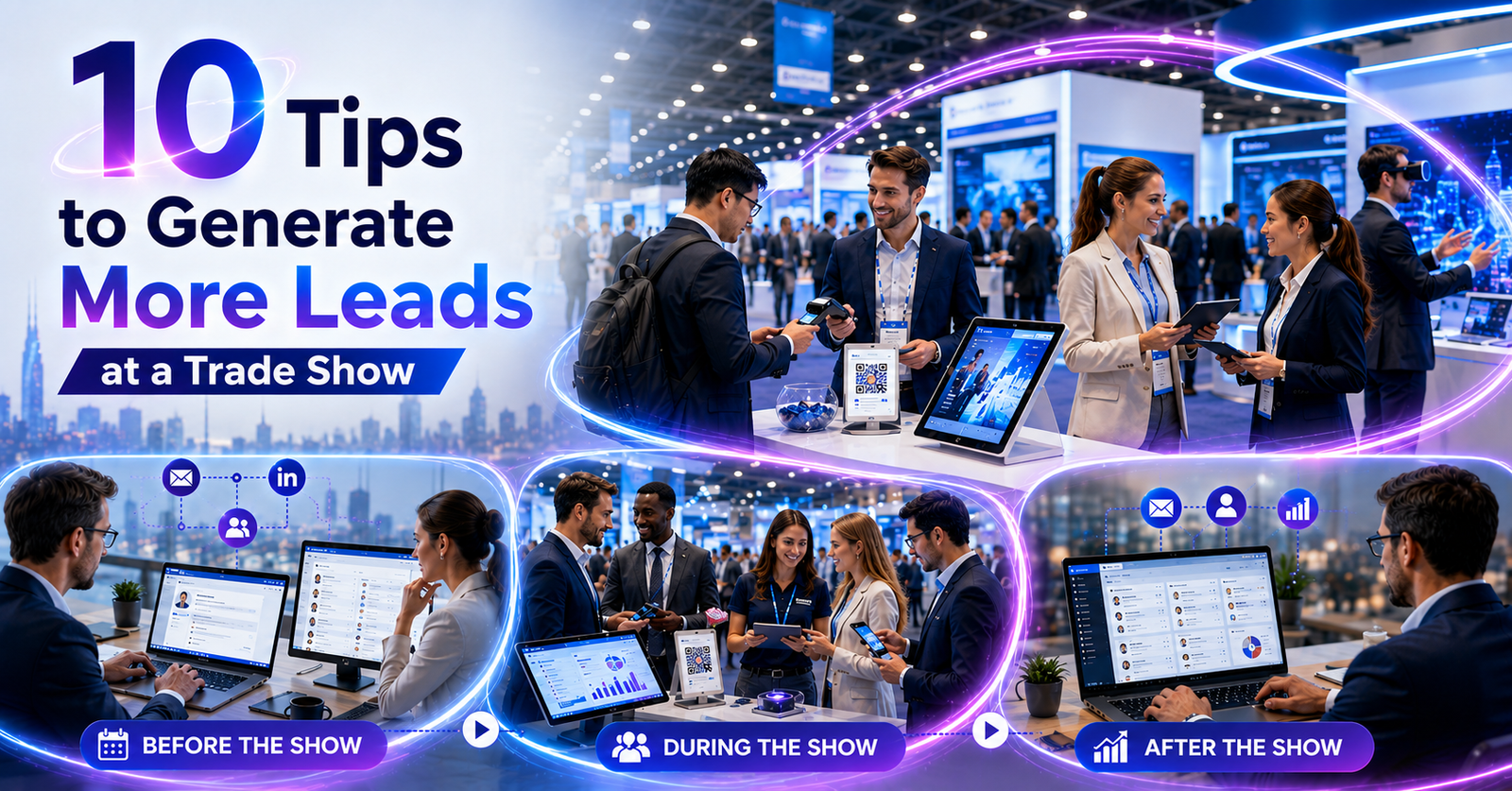
You spent months planning, thousands of dollars on booth space, and three days on your feet. Then the show ends, and you are left with a stack of badge scans, half of which you cannot remember talking to. Sound familiar?
Here is the number that should change how you think about your next event. According to the Center for Exhibition Industry Research, 81 percent of trade show attendees have buying authority. These are not casual browsers filling time between sessions. They are decision-makers walking the floor with budget and intent. The problem is not a lack of opportunity. The problem is that most exhibitors are still using the same booth-and-brochure playbook that worked a decade ago, while the smart ones have shifted to a more deliberate, data-backed approach.
This guide breaks down ten tips, covering everything before the show opens to the moment your leads land in your CRM, that separate exhibitors who walk away with real pipeline from those who walk away with a bag of business cards.
1. Start Your Outreach Before the Show Even Opens
The single biggest mistake exhibitors make is treating the show floor as the starting line. By the time doors open, your best prospects have already decided which booths are worth their limited time, and if they do not know you exist, you are competing for attention you should have already earned.
Research from the Event Marketing Institute found that pre-event outreach can increase booth traffic by as much as 33 percent. The tactic itself is simple. Two to three weeks before the event, run a targeted email and LinkedIn campaign aimed specifically at attendees who match your ideal customer profile and have already registered to attend. Let them know you will be there, why it matters to them, and give them a reason to stop by, whether that is an exclusive demo slot, a private consultation, or early access to something you are launching.
The obvious catch is that you need to know who is actually registered before you can reach them. This is where a service like ExpoLake becomes genuinely useful. It provides verified attendee lists for trade shows and industry events, which means you can build a pre-show outreach campaign around real registrants instead of guessing who might show up. Exhibitors using this approach are not discovering their audience on the show floor. They are confirming meetings before they even pack their booth materials.
2. Choose the Right Show Based on Data, Not Habit
Not every trade show deserves your budget, even if your company has exhibited there for years out of habit. Before committing spend, define what you actually want out of the event. Are you launching a product, entering a new region, or trying to reach a specific buyer persona? Your answer should shape which events make the cut.
Study attendee demographics for the show, review who exhibited last year, and if possible, talk to past exhibitors about lead quality and foot traffic. A simple scoring system, rating each potential event on attendee relevance, geographic reach, cost per lead, and timing against your business calendar, removes a lot of the guesswork and keeps you from repeating a show purely because it is what you have always done.
3. Define What a Qualified Lead Actually Looks Like
Before your staff steps onto the show floor, your team needs a shared, specific definition of what counts as a good lead. Without this, you end up with hundreds of badge scans and no clear sense of which ones deserve a follow-up call tomorrow versus which ones were just there for the free giveaway.
Set a measurable goal using a framework like SMART, specific, measurable, achievable, relevant, and time-bound. Rather than a vague goal like “generate leads,” aim for something like collecting contact information from 50 qualified prospects and booking 25 follow-up meetings within two weeks of the show. Define qualification criteria around budget, authority, need, and timeline, so your team knows exactly who to prioritize the moment a conversation starts.
4. Design Your Booth Around Buyer Journeys, Not Org Charts
A surprisingly common booth mistake is organizing the space around how your company is internally structured rather than how a visitor actually experiences their problem. Separate displays for each product line might make sense on your org chart, but it forces visitors to piece together how your offerings solve their specific challenge.
Instead, map out the common problems your visitors face and group your solutions by use case or desired outcome. Orient signage, staff positioning, and interactive touchpoints around visitor intent. According to CEIR, booth layout is one of the top three drivers of dwell time, and dwell time correlates strongly with lead generation. The longer someone stays engaged at your booth, the more likely they are to become a real conversation rather than a passing glance.
5. Make Lead Capture Frictionless
If your lead capture process still relies on visitors filling out a form on a clipboard, you are losing people before they finish writing their email address. Attendees today expect speed. NFC-enabled tap technology, QR code scanning, and progressive web apps let visitors share their information in seconds while instantly receiving a digital brochure or resource in return.
Real-time CRM integration matters just as much as the capture method itself. Syncing lead data directly into your CRM at the moment of capture, rather than manually entering business cards after the show, has been shown to meaningfully shorten the sales cycle by eliminating the delay between interest and follow-up. Whatever tool you choose, the goal is the same: reduce friction so that expressing interest takes seconds, not minutes.
6. Use Interactive Technology That Actually Earns Its Space
Touchscreens have been a trade show staple for years, but far too often they are reduced to a looping slideshow nobody stops to watch. Interactive content, done right, can outperform static displays by a wide margin in memory recall and engagement time.
Let visitors self-select their industry, role, or specific pain point and walk through a guided, choose-your-own-path demo tailored to what they actually care about. Augmented reality can be especially effective for products that are large, complex, or hard to visualize, like equipment, architecture, or software systems. The goal is to turn passive viewers into active participants, because the more someone interacts with your content, the more they are effectively pre-qualifying themselves as a serious prospect.
7. Gamify Engagement With a Clear Purpose
Attendees are tired of the generic prize wheel with nothing tied to it. Gamification works when it is designed with intention, not just as a gimmick to draw a crowd. A short industry-related quiz, a leaderboard attendees want to climb, or a trivia challenge tied to your product category can meaningfully increase both engagement and the quality of data you collect.
Brands that build gamification into their booth strategy report noticeably higher booth engagement compared to static setups. The key detail is making sure participation requires a lead scan first. That way, the fun is not separate from your lead generation goals. It is the mechanism that drives them.
8. Train Your Staff to Qualify, Not Just Chat
Even the best booth design and technology will underperform if the people staffing it are not prepared to have the right conversations. Your staff needs solid product knowledge, yes, but more importantly, they need to know how to actively listen and ask open-ended questions that surface a visitor’s actual need, budget, and timeline.
Practice matters here. Role-playing different visitor types before the show, from the curious browser to the ready-to-buy decision-maker, helps your team transition conversations smoothly and know when to invest more time versus when to politely wrap things up. A staff member standing idle, scrolling their phone, or sitting down while a visitor is at the booth is not a minor detail. It is one of the fastest ways to lose a lead who was otherwise interested.
9. Score Every Lead on the Spot
Not every conversation deserves the same follow-up urgency, and figuring this out after the show, when memory has already faded, is far less effective than scoring leads the moment they happen. A simple three-tier system works well for most teams:
Tier A, hot leads, are decision-makers with a clear need and timeline who require immediate follow-up. Tier B, warm leads, are influencers or evaluators who need more information or a bit more time before deciding. Tier C, cold leads, are early-stage contacts who are not ready to commit but might become viable down the road.
Tag each lead accordingly using your capture app at the moment of the conversation, not from memory later that evening. This single habit is what allows your sales team to spend their limited post-show hours where they matter most instead of working through hundreds of contacts with equal urgency.
10. Follow Up Fast, and Reach the People Who Never Reached Your Booth
Speed is everything once the show ends. Leads contacted within 24 hours convert at a dramatically higher rate than those contacted a week later, and some of the more aggressive exhibitors are now aiming for a one-hour follow-up window for their hottest leads, sending a short personalized note referencing the specific conversation while it is still fresh.
But here is what most follow-up plans miss entirely. Your badge scanner only captured the people who physically walked up to your booth, which at a large show is often a small fraction of everyone who registered and would have been a strong fit for your product. There were plenty of well-matched attendees in that building who simply never crossed paths with your specific aisle across three days packed with hundreds of competing booths.
This is the second point where a verified attendee list earns its keep. Beyond pre-show outreach, having access to the full list of registered attendees through a provider like ExpoLake lets you run a targeted post-event email campaign aimed at attendees who match your buyer profile but never made it to your booth. It is not a replacement for your booth conversations. It is an extension of them, turning “everyone who scanned a badge” into “everyone at the show who was actually a fit,” which for most exhibitors is a considerably larger number than the leads sitting in your scanner.
Once the follow-up sequences are running, resist the urge to judge success purely on badge scan counts. Track lead quality alongside quantity, engagement depth with your interactive tools, and how leads move through your sales pipeline over the following weeks and months. Because B2B buying cycles tied to trade show leads often run several months, give your measurement window enough time before drawing conclusions about which show, booth strategy, or follow-up cadence actually produced revenue.
Bringing It All Together
Generating more leads at a trade show is not about one clever booth idea or a bigger giveaway budget. It is the accumulation of small, deliberate decisions, choosing the right show, reaching people before the doors open, designing your space around buyer problems, removing friction from lead capture, training your team to qualify rather than just chat, and following up fast enough that your prospect still remembers the conversation.
The exhibitors who consistently walk away with strong pipeline are the ones treating the entire event, before, during, and after, as one connected system rather than three separate activities. If you are looking to strengthen the parts of that system that happen outside the booth, ExpoLake provides verified attendee and exhibitor data for trade shows and industry events worldwide, making it easier to reach the right people before the show starts and to close the gap with the attendees your booth never got the chance to meet in person.
Frequently Asked Questions (FAQ's)
How many leads should I expect from a trade show?
This depends heavily on booth size, foot traffic, and how aggressively you qualify. Rather than fixating on a raw number, set a specific target tied to quality, such as a set number of qualified conversations or booked follow-up meetings, so you are measuring something that actually predicts revenue.
What is the best way to follow up with trade show leads?
Speed and personalization matter more than the channel you choose. Aim to send your first follow-up within 24 hours, ideally sooner for your hottest leads, and reference the specific conversation you had rather than sending a generic templated message.
How do I know if a trade show is worth attending again next year?
Track lead quality, not just lead volume, and follow those leads through your sales pipeline for at least 90 days before drawing conclusions. A show that produced fewer but highly qualified leads may deliver better ROI than one that produced a large stack of unqualified contacts.
Is pre-show outreach really worth the extra effort?
Yes. Data from the Event Marketing Institute shows pre-event outreach can increase booth traffic by up to a third, and it also shortens the sales conversation once attendees arrive, since they already understand who you are and why your booth is worth their time.